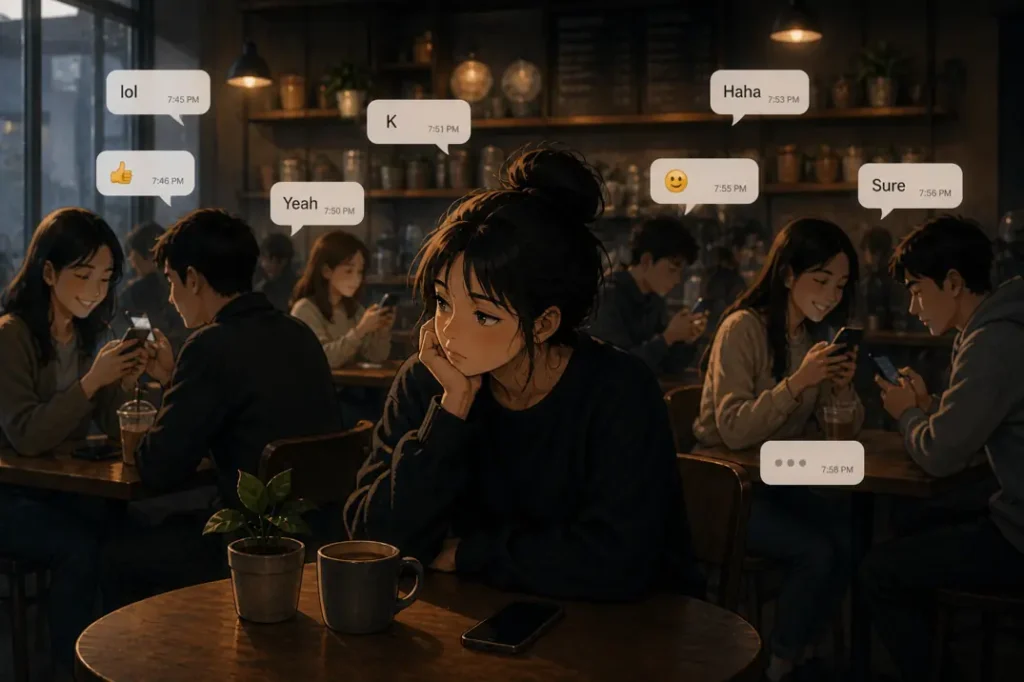
“At first, it felt awkward. Everyone kept reaching for their phone without thinking.”
So they made a simple rule: no phones during dinner.
What surprised them wasn’t the silence — but how much more present everyone slowly became.
How Phone Interruptions Fragment Natural Conversation Flow
The most immediate change the group noticed was how differently conversations unfolded without the familiar rhythm of buzzes, glances, and brief pauses to check screens. Mark, who typically received several work notifications during their dinners, found himself finishing thoughts he would normally abandon mid-sentence. The group realized that even brief phone interactions—lasting just seconds—created invisible breaks that changed the entire dynamic of their exchange.
Brief Digital Distractions Reduce Emotional Connection
What struck them wasn’t just the frequency of interruptions, but how these small moments affected their ability to stay emotionally present with each other. Lisa mentioned feeling more attuned to the subtle expressions and voice changes that she usually missed when part of her attention was split between the conversation and her phone. The emotional undertone of stories seemed clearer, and responses felt more genuine rather than the quick acknowledgments they had grown accustomed to giving while mentally preparing to check their devices.
Most Digital Habits Happen Without Conscious Decision
Perhaps the most unsettling discovery was how often they reached for phones that weren’t there. Throughout the evening, each person found themselves unconsciously moving their hand toward their pocket or the table where their phone normally rested. These automatic gestures revealed how deeply ingrained their digital habits had become, operating below the level of conscious choice.
Phone-Checking Becomes Muscle Memory in Social Settings
The group counted at least fifteen instances where someone made the motion to check their phone without realizing it until their hand met empty space. This physical habit seemed strongest during natural conversation pauses—moments that would typically trigger a quick scroll through messages or social media. The automatic nature of these movements made them question how many other social interactions were shaped by this unconscious reaching for digital stimulation.
Undivided Attention Changes the Quality of Social Interaction
With phones removed from the equation, conversations took on a different quality that felt both familiar and strange. Topics developed more fully instead of being cut short by digital interruptions. The group found themselves asking follow-up questions they might normally skip, and sharing details they often kept brief to avoid competing with phone notifications for attention.
Focused Presence Creates Space for Deeper Exchange
Without the option to mentally exit through their phones, each person became more invested in making the conversation engaging. Stories became more detailed, reactions more animated, and the natural back-and-forth of genuine dialogue replaced the choppy exchange they had unconsciously accepted as normal. They realized that most people do not recognize how fragmented conversations have become—until distractions are removed entirely.
Conversational Silence Feels More Noticeable Without Digital Escape
One of the more uncomfortable discoveries was how aware they became of natural pauses in conversation. Without phones to automatically fill quiet moments, the group initially felt awkward during lulls that would typically be occupied by scrolling or checking messages. These silences, which might last only thirty seconds, seemed to stretch much longer than usual.
Learning to Sit with Stillness in Social Settings
Rather than rushing to fill every pause, they gradually learned to let these quiet moments exist without immediately reaching for stimulation. Some of their most meaningful exchanges emerged from these silences—observations they might not have shared if phones had provided an easy escape from the temporary stillness. The discomfort with pauses revealed how much they relied on digital devices to avoid even brief moments of social uncertainty.
Phone-Free Conversations Become More Vivid and Memorable
By the end of the evening, each person could recall specific details from their conversations with unusual clarity. Without the competing mental demands of processing phone notifications alongside social interaction, their attention had been more fully present for the stories, jokes, and observations shared around the table.
Reduced Mental Multitasking Strengthens Memory Formation
The group realized that their usual dinners often blurred together in memory, with few standout moments or specific conversations they could recall weeks later. This phone-free dinner, by contrast, felt distinct and memorable in ways that surprised them. The absence of divided attention allowed for deeper processing of their social experience, creating stronger emotional imprints than their typical digitally-interrupted gatherings.
Small Experiments Reveal the Depth of Digital Dependence
What began as a casual suggestion became an eye-opening experiment that showed the group how thoroughly phones had reshaped their social interactions. They weren’t necessarily ready to make phone-free dinners a permanent practice, but the experience helped them recognize patterns they hadn’t consciously noticed before. Phones weren’t ruining their connection on purpose, but they quietly divided attention in moments that once felt fully shared.
The evening ended with mixed feelings—appreciation for the deeper connection they had experienced, but also some relief at being reunited with their devices. Most admitted they would try similar experiments again, though perhaps not every time they gathered. The real insight wasn’t that phones were inherently harmful to friendship, but that their presence had become so automatic that removing them revealed just how much their social habits had adapted around digital interruption.