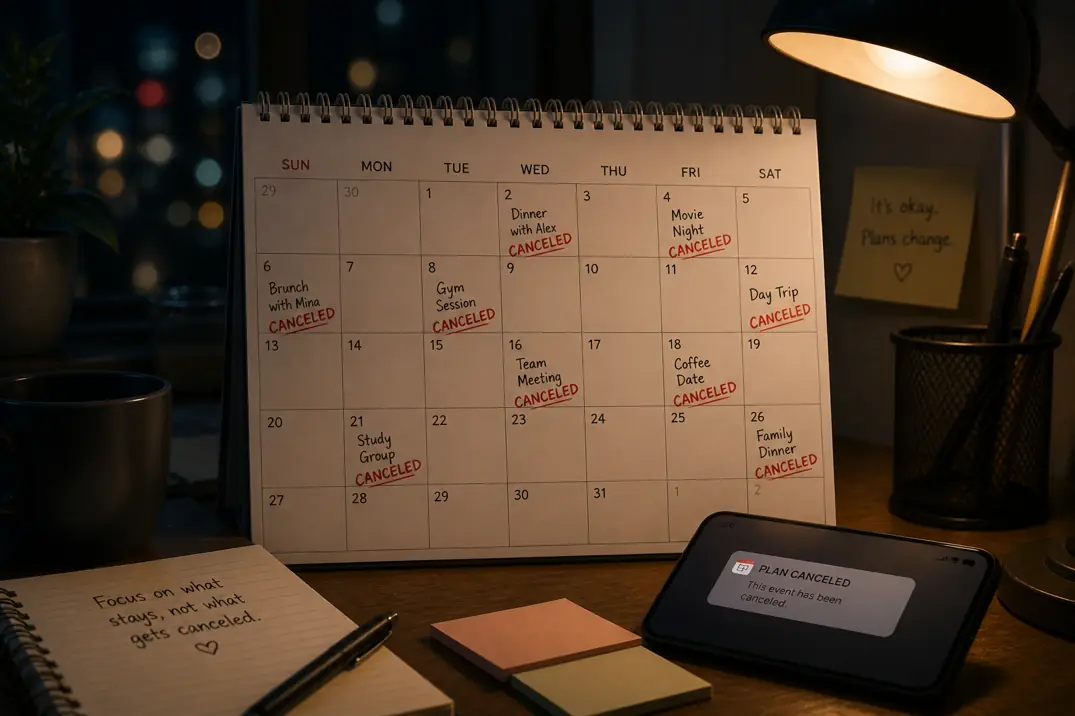
That Friday night dinner reservation you made three weeks ago? Your friend just texted to cancel. The weekend hiking trip planned with your college roommate? Postponed indefinitely. The book club meeting that everyone confirmed they'd attend? Half the group bowed out by Wednesday. If this sounds familiar, you're witnessing a quiet social shift that's become so common it barely registers as disappointment anymore.
Plans get canceled more often than they used to, and somewhere along the way, we all stopped being shocked by it. What once felt like a breach of social contract now feels like Tuesday.
What Was Once Rude Now Feels Routine
Five years ago, canceling plans required a phone call, a genuine excuse, and often a makeup plan offered immediately. Today, a simple "Sorry, can't make it tonight" text sent two hours before dinner is met with understanding rather than offense.
This isn't about people becoming thoughtless. The shift runs deeper than that. Busy schedules, unpredictable work demands, and the general complexity of modern life have created an environment where rigid social commitments feel increasingly unrealistic. When your coworker might text about an urgent project at 4 PM, or your child's daycare calls with a pickup emergency, that evening wine tasting suddenly becomes impossible.
The social acceptance of canceling has grown because everyone recognizes they've been there. We've all had weeks where showing up to planned activities felt like climbing a mountain when we could barely manage the stairs.
The Burden of Pretending Everything Is Fine
People are becoming more honest about what they can actually handle, rather than maintaining the facade that they can do it all. This honesty, while sometimes disappointing for the person left waiting at the restaurant, represents a more authentic way of navigating social relationships.
The old model required showing up regardless of your mental state, energy level, or capacity to engage meaningfully. The new model acknowledges that sometimes being present physically while absent emotionally serves no one well.
Energy Has Become the New Currency
When someone commits to plans on a Sunday evening, they're making their best guess about how they'll feel on Thursday night. But energy levels have become less predictable than ever before. The cumulative effect of work stress, family responsibilities, and constant digital stimulation creates a kind of decision fatigue that's hard to forecast days in advance.
Consider the parent who agrees to a dinner out, forgetting that it's the week of their teenager's college application deadlines. Or the friend who says yes to weekend brunch, not accounting for the emotional drain of a difficult work presentation scheduled for Friday afternoon.
Good Intentions Meet Reality
Commitment hasn't disappeared—it's being renegotiated around energy and mental capacity. People still want to maintain friendships and social connections, but they're learning to protect their bandwidth more carefully. This creates a tension between wanting to be social and needing to preserve energy for essential daily functions.
The result is a pattern of hopeful planning followed by realistic canceling. It's not malicious or careless. It's an acknowledgment that human energy isn't infinite and that social activities require genuine presence to be worthwhile.
Rest Competes With Connection
Social plans now compete directly with something that previous generations took for granted: unstructured downtime. When free time is scarce, the choice between seeing friends and simply being alone at home becomes weighted differently than it once was.
A quiet evening at home isn't just relaxation—it's recovery. After days filled with meetings, commutes, family logistics, and constant decision-making, the prospect of getting dressed, traveling somewhere, and engaging in conversation can feel overwhelming rather than enjoyable.
This shift reflects changing priorities rather than changing values. People still care about relationships, but they're recognizing that maintaining those relationships long-term requires sustainable practices. Sometimes that means disappointing someone tonight to be a better friend next month.
Flexibility Replaces Firm Commitments
Plans have quietly transformed from appointments into possibilities. Even when people confirm their attendance, there's an unspoken understanding that circumstances might change. This creates a new social dynamic where backup options and loose scheduling become the norm.
Group chats now include regular check-ins about whether events are still happening. Host friends build flexibility into their planning, making meals that can easily accommodate fewer people or choosing restaurants that don't require exact headcounts days in advance.
When Everything Becomes Tentative
This flexibility serves practical needs, but it also creates a subtle anxiety around social planning. The certainty that people could once feel about upcoming events has been replaced by a wait-and-see approach that extends right up until the planned activity begins.
Technology Makes Backing Out Easier
Digital communication has lowered the social friction of canceling plans dramatically. A quick text requires much less emotional energy than a phone conversation, and it allows the canceling person to avoid hearing disappointment in real time.
This ease of communication serves people who are already stretched thin, but it also enables last-minute cancellations that might not have happened if more effort was required to bow out. The barrier between committing and canceling has become so low that plans feel less substantial from the moment they're made.
A New Social Understanding Emerges
People are becoming more understanding about cancellations, but they're also becoming less certain that planned activities will actually happen. This creates a paradox: social planning has become both more forgiving and less reliable simultaneously.
Friend groups develop new norms around confirmation timing, backup plans, and expectation management. Some people stop making plans altogether, preferring spontaneous activities that don't carry the weight of future commitment.
The shift represents a broader renegotiation of how we balance individual needs with social obligations. Plans get canceled more often because we're collectively learning that sustainable social lives require honest assessment of our capacity rather than optimistic overcommitment. Whether this leads to stronger or weaker relationships may depend on how well we learn to navigate this new terrain.