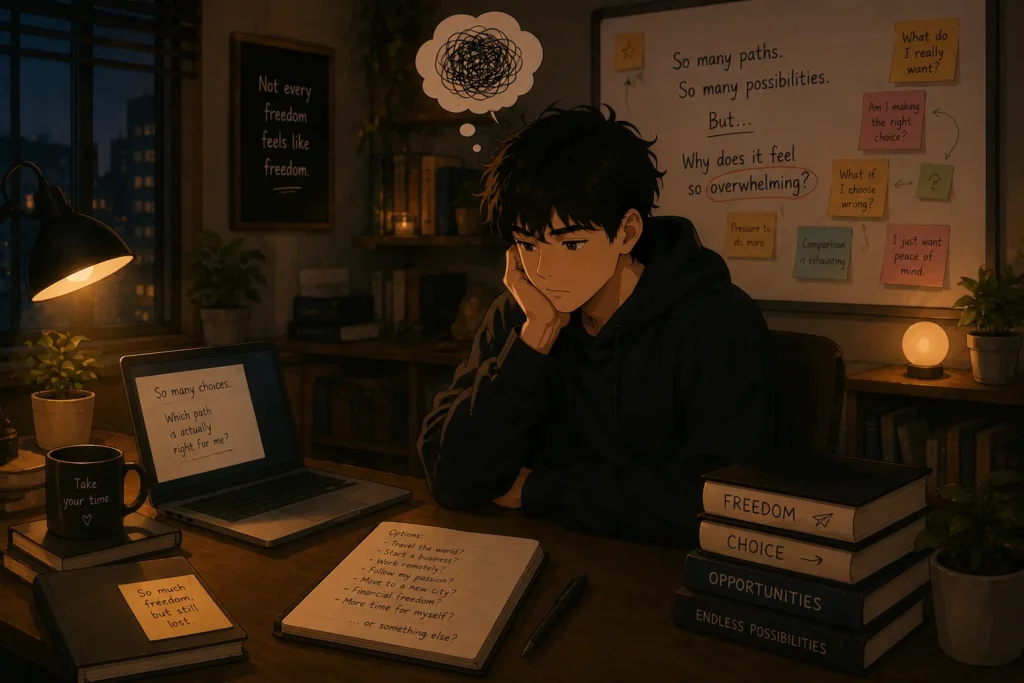
“I thought social media was helping me relax… but after deleting it for a month, I realized it was making me constantly compare my life.”
What started as a short digital detox became something deeper. She began noticing how much of her daily anxiety came from quietly measuring her life against everyone else’s.
The Hidden Nature of Digital Comparison
Most people scroll through social media the same way they breathe — automatically, without conscious thought. Sarah would check Instagram while waiting for coffee to brew, flip through Facebook during commercial breaks, and scan LinkedIn before bed. Each session lasted only minutes, but the mental calculations happened faster than she could track them.
The Mind Processes Comparisons in Milliseconds
During her digital detox, Sarah began noticing how comparison used to happen occasionally — maybe when running into an old friend at the grocery store or attending a high school reunion. Now, it happens every time people open their phones. A former colleague’s vacation photos, a neighbor’s home renovation, a friend’s career announcement — each post triggers an unconscious evaluation of where you stand in relation to others.
The human brain processes these comparisons in milliseconds, often before conscious awareness kicks in. Sarah realized she’d been making hundreds of these micro-comparisons daily without recognizing the cumulative emotional weight.
When Highlight Reels Become the Standard
Social media platforms showcase the best moments from people’s lives — the promotion announcement, not the months of job stress leading up to it; the beautiful dinner party, not the cleanup afterward or the argument about money that preceded the grocery shopping.
Perfect Moments Create Impossible Benchmarks
Sarah found herself questioning why her Tuesday evening felt mundane compared to the seemingly endless stream of adventure and achievement in her feed. She’d forgotten that she was comparing her internal experience — complete with boredom, anxiety, and everyday frustrations — to other people’s carefully selected external presentations.
This distortion happens gradually. Seeing only highlights from others creates unrealistic expectations about what normal life should look like. A quiet weekend at home begins to feel like failure when everyone else appears to be hiking mountains or hosting elaborate brunches.
How Constant Exposure Shifts Emotional Patterns
The most surprising discovery for Sarah wasn’t that social media caused comparison — she’d always known that intellectually. What shocked her was realizing how profoundly repeated exposure had influenced her baseline emotional state.
Small Doses Add Up to Significant Impact
Social media is not inherently harmful, but constant exposure to curated lives changes how people see themselves — even when they don’t notice it happening. Sarah’s confidence had eroded so gradually that she’d attributed her increasing self-doubt to work stress or getting older.
During her break, she recognized that her mood had become subtly tied to external validation — likes, comments, shares — in ways that made her feel unsteady. Without those daily hits of comparison and approval-seeking, her emotional equilibrium began to stabilize.
Beyond Traditional Sources of Stress
Previous generations dealt with pressure from family expectations, workplace competition, or neighborhood social dynamics. These interactions happened in specific contexts with clear boundaries.
Digital Anxiety Operates Around the Clock
Today’s anxiety often stems from sources that never switch off. Sarah realized that online environments now shape emotional stress on a daily basis, creating pressure that follows people home, into their bedrooms, and even on vacation.
The woman at the coffee shop isn’t just enjoying her morning — she might be unconsciously comparing her breakfast choice to the wellness influencer’s elaborate smoothie bowl from two hours earlier. This kind of ambient comparison creates a low-level stress that’s hard to identify but exhausting to carry.
The Clarity That Comes From Stepping Back
By day ten of her break, Sarah noticed she’d stopped mentally cataloging moments as “post-worthy” or dismissing experiences as too ordinary to share. The constant internal narration had quieted.
Distance Reveals the Overstimulation
Reducing exposure often helps people recognize how overstimulated they were. Sarah began enjoying conversations without thinking about how to translate them into captions. She read books without feeling compelled to photograph them. Simple pleasures felt sufficient again, rather than inadequate compared to someone else’s version of the same activity.
The break didn’t solve all her problems, but it created enough space for her to distinguish between her own dissatisfactions and those manufactured by endless comparison.
A Growing Shift in Digital Habits
Sarah’s experiment reflects a broader trend. More individuals are questioning whether constant exposure is emotionally sustainable. Some friends have started taking regular social media breaks, while others have unfollowed accounts that consistently trigger comparison.
The goal isn’t necessarily to quit entirely, but to develop more intentional relationships with these platforms. People are recognizing that the cost of constant connection might include a kind of emotional tax they hadn’t fully calculated — and they’re deciding whether that trade-off still makes sense for their mental well-being.